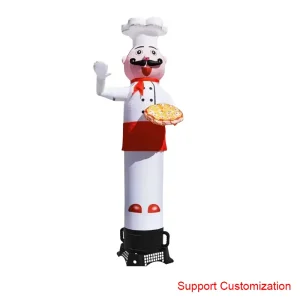
Engineered structures tailored to survive the distinct climate, high wind shear, and solar intensity parameters of the Valley of Mexico.
Mexico City (CDMX) stands as one of the largest metropolitan economic engines in Latin America. Operating at a high altitude of approximately 2,240 meters above sea level, the capital's geographic location creates distinct physical and atmospheric challenges for outdoor architectural deployments. The region experiences intense solar ultraviolet (UV) exposure, sharp diurnal temperature fluctuations, and sudden meteorological variations, including heavy seasonal rainstorms (temporal) and high-wind anomalies.
From an industrial and commercial perspective, businesses throughout CDMX, Estado de México, and surrounding corridors are aggressively moving away from heavy, slow-to-assemble steel frame structures. Traditional setups require substantial logistical transport, multiple technicians, and extensive assembly times. Instead, sealed high-pressure and constant-air inflatable structures have emerged as the standard for swift deployment. Their usage scales from temporary warehouse spaces in logistics hubs like Cuautitlán Izcalli to high-profile brand activations in Polanco and Santa Fe.
For B2B buyers and structural engineers, understanding these local variables is critical. High UV radiation accelerated by altitude causes rapid degradation of low-grade polymer coatings, leading to micro-cracking and loss of structural integrity. Consequently, specifying tents built with UV-stabilized, high-tenacity polyvinyl chloride (PVC) or thermoplastic polyurethane (TPU) is imperative for operations within the Valley of Mexico.
Modern inflatable structures are not mere novelty items; they are highly engineered temporary buildings. As a leading manufacturer serving global markets, we divide inflatable structures into two key functional typologies: Low-Pressure (Constant Air Flow) and High-Pressure (Sealed Air Beam) systems.
Constant air flow structures rely on continuous blower operation, ideal for rapid event backdrops, promotional arches, and short-term pavilions. Sealed air beam structures, on the other hand, employ double-walled Drop-Stitch fabrics or high-pressure TPU bladders surrounded by heavy-duty polyester sleeves. Once inflated, these structures maintain rigidity for weeks without active power inputs—offering critical reliability during grid failures in industrial parks.
| Specification Parameter | High-Pressure Sealed Beam Tent | Constant Air Flow Tent | Ideal Application Scenario |
|---|---|---|---|
| Core Material | 0.7mm - 0.9mm TPU/PVC Tarpaulin | 420D - 600D PU-coated Oxford Nylon | Structural performance vs. portability trade-off |
| Wind Resistance | Up to 80 km/h (with guy-lines) | Up to 45 km/h | High-velocity wind corridors / open terrains |
| Inflation Sustenance | Sealed system; stays rigid for 20+ days | Requires active power/blower input | Off-grid locations and disaster relief |
| Flame Retardancy | NFPA 701, DIN 4102 B1 Compliant | SGS certified flame retardant coating | Indoor exhibitions and strictly zoned municipal sites |
Furthermore, structural reliability depends heavily on the sealing technology utilized. While basic systems use thermal hot-air sewing, our manufacturing processes prioritize High-Frequency (HF) Dielectric Welding. This technique melts the polymer chains of the two surfaces at a molecular level, creating a fused seam that is stronger than the parent material itself. This makes the tent highly resistant to seam expansion under the high temperature differentials common in the central plateau of Mexico.
From industrial zones in the north to cultural squares in the historic center, temporary inflatable enclosures serve major commercial initiatives:
CDMX hosts major trade fairs at Centro Citibanamex and Expo Santa Fe. Inflatable domes and customized brand tunnels allow marketing teams to create pop-up exhibition spaces with fully custom digital sub-prints that stand out in crowded arenas.
Logistics operators in Tlalnepantla and Querétaro use large-span inflatable modular buildings as temporary dry-storage areas. The rapid deployment of these structures circumvents lengthy building permission cycles for permanent steel structures.
Given the seismic nature of Mexico's geography, civil defense and NGO networks require reliable disaster response shelters. Inflatable medical field hospitals can be inflated in under 10 minutes by a team of two, serving as mobile triages with integrated HVAC ducting.
Purchasing directly from top-tier Chinese manufacturing operations like Zhengding Carnival Inflatable Model Co., Ltd. offers substantial advantages in raw material sourcing and process control. Our integrated manufacturing hub controls every step of production: from the synthesis of flame-retardant PVC tarpaulins to precise 3D CAD pattern design and CNC material cutting tables.
Through advanced automation, our production pipeline ensures absolute consistency across batches, reducing the failure rates of high-pressure air valves to less than 0.05%. For Mexican buyers, this directly translates into premium-grade structures without the high margins imposed by local distributors.
Logistically, we facilitate smooth shipping routes from the Port of Tianjin or Port of Shenzhen directly to Mexico's key maritime entry points, including Manzanillo and Lázaro Cárdenas. For urgent commercial deployments, air freight through Benito Juárez International Airport (AICM) or the new Felipe Ángeles International Airport (AIFA) ensures custom items arrive in Mexico City within 7-10 working days of production completion.
Temporary structures in Mexico City must conform strictly to municipal codes and safety frameworks managed by the Secretary of Civil Protection (Secretaría de Gestión Integral de Riesgos y Protección Civil). Compliance is non-negotiable for large-scale public events or permanent industrial storage setups.
We supply a comprehensive technical documentation pack with every custom order, containing structural blueprints, pressure limitations, wind load capacity tables, and material safety data sheets (MSDS) to streamline the local permitting process.
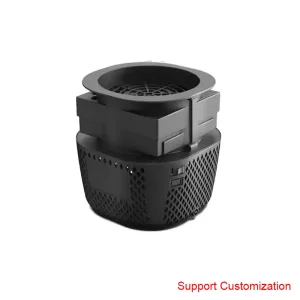
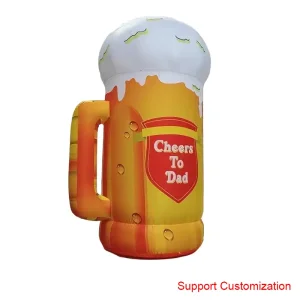
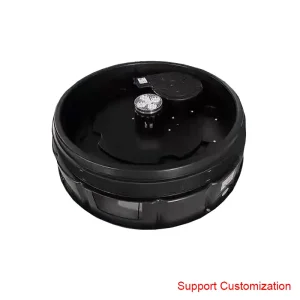
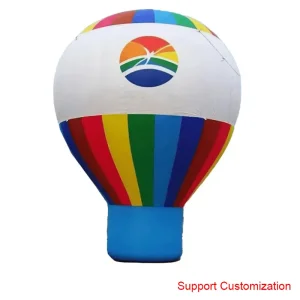
A complete suite of complementary inflatable structures, high-performance fans, and experiential marketing systems built for Mexican businesses.
Answers to common structural and logistical queries raised by operations and procurement directors in Mexico.
Get in touch with our design and engineering team today to receive structural calculations, custom 3D renders, and a direct manufacturing quote for your Mexico City deployments.
Send Inquiry Now Zhengding